
The clean energy transition is not confined to a single discipline. As wind turbines expand in physical scale and offshore deployment, engineering solutions increasingly demand an integrated approach – connecting aerodynamic blade design, structural marine dynamics, and complex electrical grid integration.
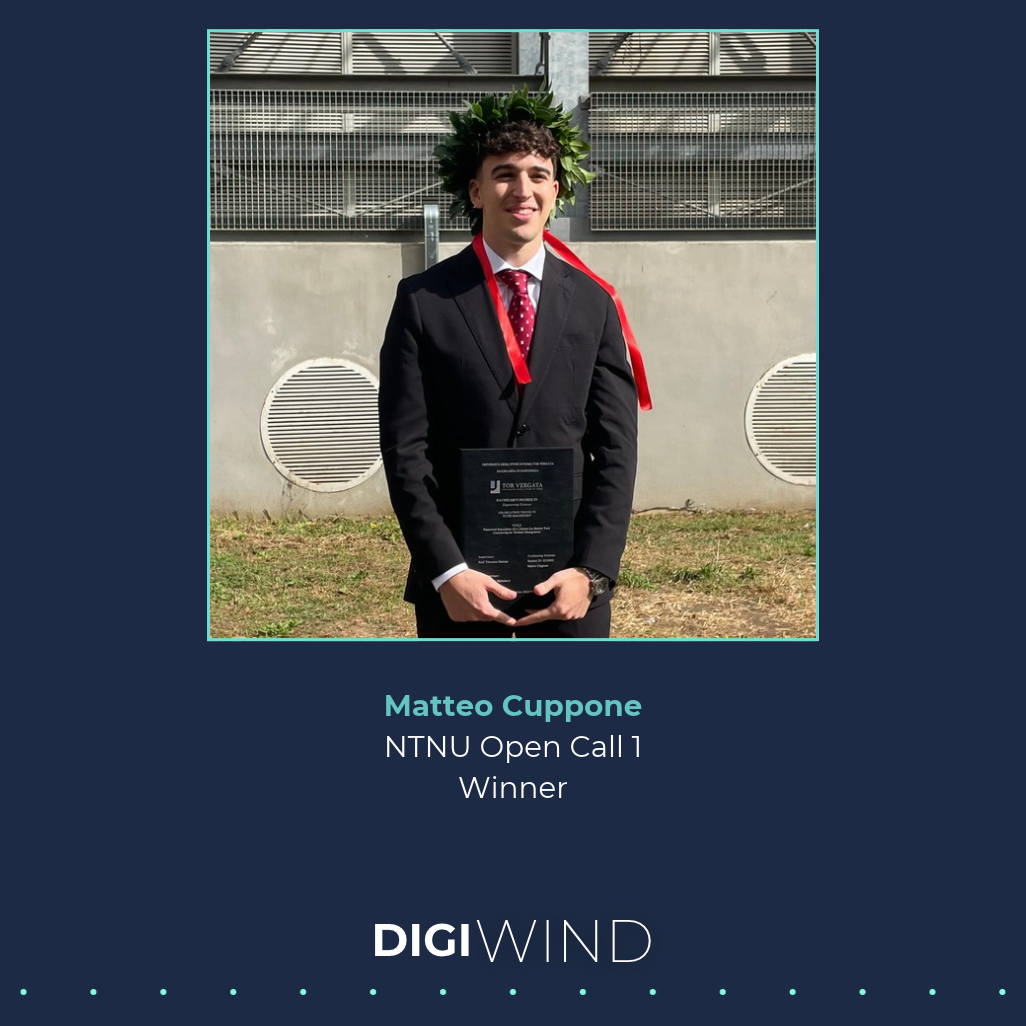
Addressing this multi-disciplinary challenge is at the heart of the DigiWind initiative. We are proud to spotlight one of our scholarship recipients, Matteo Cuppone, a Master’s student in Mechanical Engineering from Sapienza University of Rome, who is currently undertaking an exchange semester at the Norwegian University of Science and Technology (NTNU) in Trondheim.
Uniting Aerodynamics, Marine Structures, and Power Systems
For Matteo, diving deeper into the renewable energy sector has meant examining how mechanical components behave under demanding environmental forces. His core technical interests centre on the aerodynamic design and mechanical behaviour of wind turbines, complemented by fluid machinery and hydroelectric power generation.
Securing the DigiWind Open Call #1 scholarship provided the vital support required to move from theory to high-level practice in Norway.
“Being selected as one of the winners of the DigiWind Open Call #1 scholarship provided the crucial support needed to undertake my exchange semester at NTNU,” Matteo explains. “It offers me the unique opportunity to attend advanced coursework across both the Department of Electric Energy and the Department of Marine Technology, learning directly from leading international experts and expanding my understanding of energy conversion and renewable systems.”
By taking courses spanning two world-renowned NTNU departments, Matteo is able to examine the full lifecycle of wind energy conversion – bridging blade aerodynamics, deep-water offshore installations, and electrical grid feeds.
Hands-on Engineering and Collaborative Next Steps
The DigiWind framework emphasises hands-on research and pan-European networking, breaking down academic silos so emerging engineers can engage directly with complex, practical problems.
Looking ahead at his exchange stay in Trondheim, Matteo is keen to translate computational models into real-world applications alongside international peers.
“I am looking forward to tackling practical engineering challenges, gaining deeper hands-on insights into wind turbine engineering, exploring innovative design methods, and mostly connecting with peers and researchers in the field.”
A Transparent and Structured Application Journey
Navigating international academic grants can often feel overwhelming, but Matteo found the DigiWind selection process clear, objective, and supportive from day one.
“The application process was straightforward, well-structured, and clear at every evaluation stage, with the selection outcomes delivered right on schedule.”
His experience highlights that when candidates have a clear sense of their technical ambitions, competitive European funding pathways are fully within reach.
Fuel Your Career in Wind Energy
As Europe accelerates the development of specialised talent in offshore and digital wind energy, DigiWind continues to offer structured funding, academic mobility, and training across leading institutions.
To learn more about active opportunities, eligibility guidelines, and how to apply, explore our current open calls at digiwind.org/digiwind-open-calls-fueling-the-future-of-wind-energy/.
