
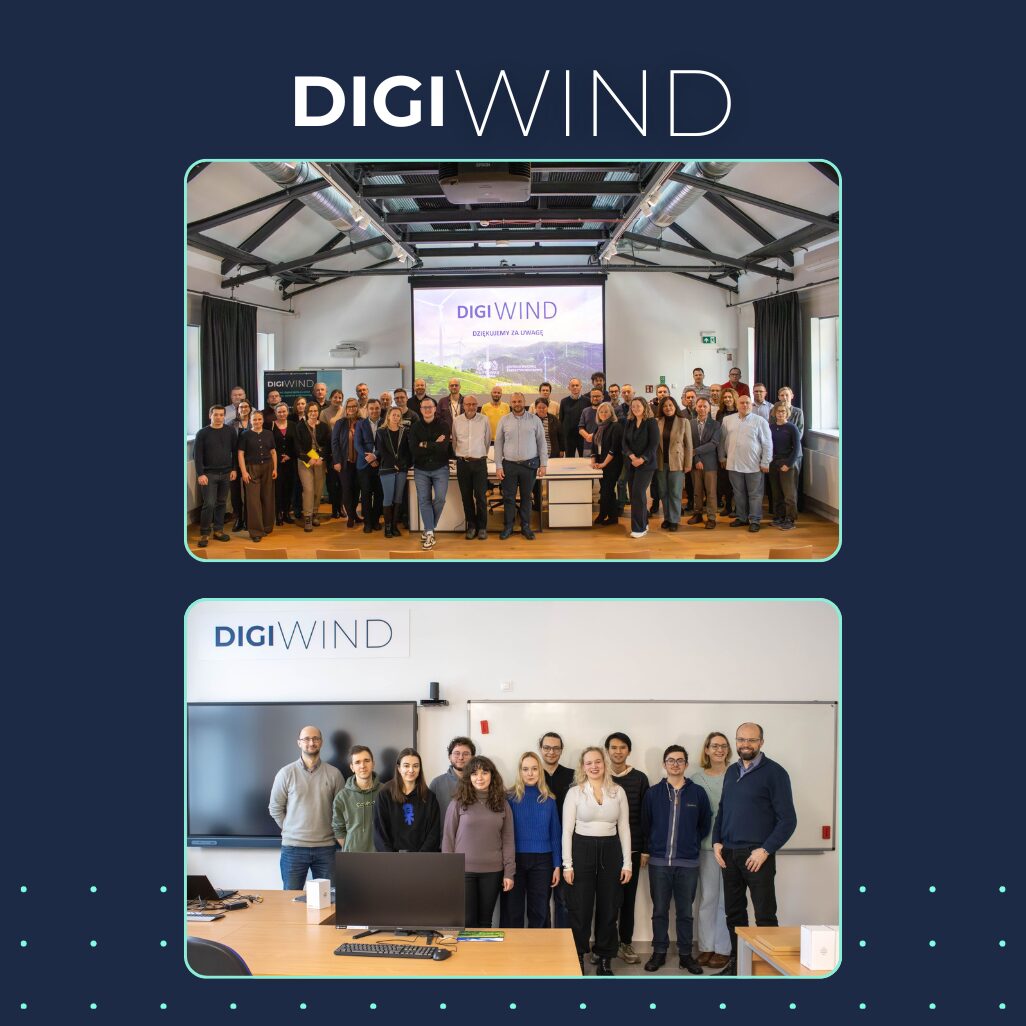
February has been a productive month for the DigiWind partners at the Gdańsk University of Technology, marked by milestones in education, international exchange, and technical research. As the project moves forward, these activities highlight how European collaboration is shaping the next generation of wind energy experts.
Milestones in Engineering Education
A primary focus this month was the “Smart Renewable Energy Engineering” master’s programme. This international course, part of the DigiWind project, has successfully completed its first semester. The programme is designed to bridge the gap between traditional engineering and the digital skills required by the modern energy sector.
As the second semester begins, a new group of students has joined the three-semester track. The course is aimed at graduates in fields such as mechanical, ocean, and energy engineering, providing them with the tools to manage the digital transformation of wind power.
Strengthening International Research Links
Innovation in wind energy rarely happens in isolation. In February, representatives from Gdańsk visited the Norwegian University of Science and Technology (NTNU) in Trondheim. This mobility visit allowed the teams to share ideas on hybrid education and the digitalisation of laboratory environments.
The visit also included meetings with SINTEF Ocean to discuss digital modelling and the monitoring of wind energy systems. By sharing data and methodologies across borders, the partners aim to make wind energy more efficient and easier to maintain through better digital oversight.
Showcasing Innovation to the European Commission
The work in Gdańsk also caught the attention of the European Commission. A film crew visited the university to gather material for a feature on EU-funded projects. They focused specifically on “Hybrid Wind,” a project developing a monitoring system based on “Digital Twin” technology.
A Digital Twin is essentially a virtual version of a physical wind turbine. By using sensors and data, engineers can monitor the health of a turbine in real-time and predict when repairs are needed before a failure occurs. This technology is a central theme of the DigiWind project’s mission to increase the reliability of renewable energy.
Planning the Next Steps
The month concluded with a project meeting in Gdańsk, where the team reviewed recent progress and set goals for the coming months. With students returning to the classroom and research collaborations expanding across Europe, the project continues to build a strong foundation for the future of the wind energy workforce.